
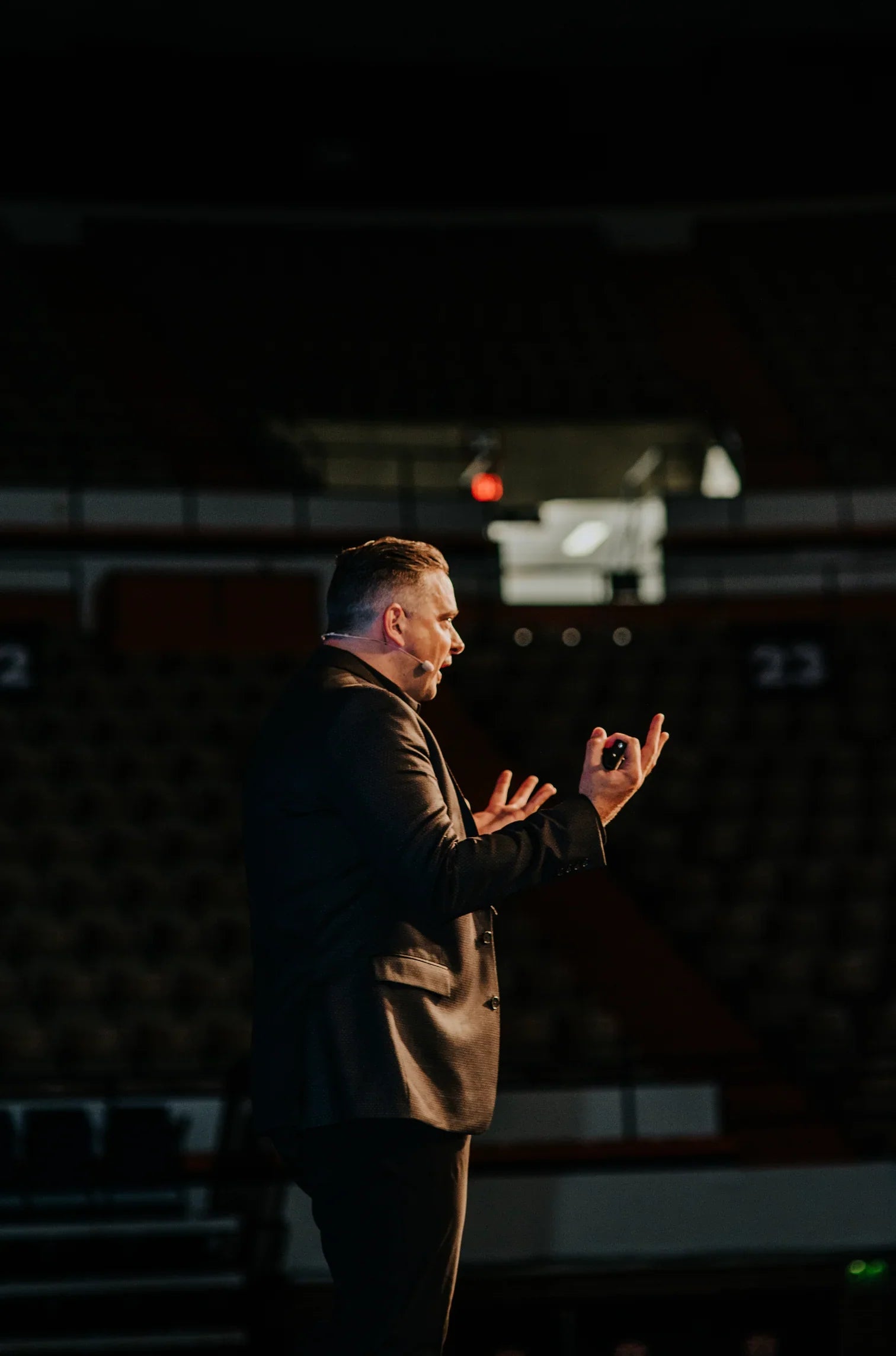
Why an Interactive Keynote Speaker Changes Everything at Corporate Events
Most corporate events follow the same format. Someone gets up and talks. The audience sits and listens. The session ends, everyone applauds, and by the time they are in the elevator heading to lunch, half of what was said is already gone.
I have been in those rooms. I have also been the person on stage responsible for making sure that does not happen. The difference between a forgettable keynote and one that actually shifts how a team thinks and works together almost always comes down to one thing: interaction.
If you are looking for an interactive keynote speaker for corporate events, here is what that actually means in practice and why it should be your top priority when evaluating speakers.
What Makes a Keynote Interactive in a Real and Meaningful Way
The word "interactive" gets thrown around loosely in the speaking industry. Some speakers call a keynote interactive because they ask the audience a yes-or-no question. That is not interaction. That is a poll.
Real interaction means the audience is doing something. They are talking to a person next to them. They are working through a structured exercise. They are reflecting, writing, discussing, or applying an idea in real time, not just absorbing it passively.
At Billy B Speaks, I use what I call the 60/40 model. I spend 60 percent of the session delivering content, telling stories, and building the framework. The other 40 percent belongs to the audience. That 40 percent is where the real learning happens. It is where people make connections between what I am saying and what they are actually dealing with at work.
The Science Behind Why Participation Drives Better Outcomes
This is not just a philosophy. The evidence behind active learning is well-documented. Research published by Harvard Business Review consistently shows that passive learning, including traditional lectures and presentations, produces far lower retention and behavior change than formats that require active engagement from participants.
When people talk about an idea with someone else, they are forced to process it more deeply. When they apply a concept in a structured exercise, they create a memory tied to action rather than just information. That is the kind of learning that follows people back to the office on Monday.
For corporate events, this matters even more because you are typically asking people to change how they work, how they communicate, or how they lead. You cannot create that kind of change with a 60-minute monologue, no matter how good the speaker is.
What Types of Corporate Events Benefit Most from an Interactive Keynote
Almost every corporate event format gets better with an interactive keynote, but some see the biggest transformation.
Company retreats are built around connection and alignment. An interactive keynote at a retreat gives your team a shared experience to build on during the rest of the event. It surfaces real conversations that might not happen otherwise.
Annual conferences and franchise conventions bring together groups who may not see each other often. The 60/40 format creates an instant sense of community because people are already working together before the session is halfway done.
Corporate training events are obvious candidates. If you are trying to shift behavior or build new skills, you need participation baked into the experience from the start, not saved for a workshop the next day.
Company-wide culture events benefit enormously from interactive keynotes because culture is not a top-down message. It is a shared set of behaviors and values that has to be felt, discussed, and owned collectively. An interactive keynote creates that kind of collective moment.
How to Tell If a Speaker Is Truly Interactive Before You Book Them
Before signing any contract, ask for a full-length recording of a recent keynote, not a speaker reel. Speaker reels are edited to look impressive. A full recording shows you how much of the session is talking versus participation, how the speaker manages transitions into interactive segments, and whether the audience actually engages or just goes through the motions.
Also ask the speaker to walk you through exactly what the interactive elements look like. What are the exercises? How long do they last? How does the speaker bring the group back together after a discussion segment? How do they handle a crowd that is slow to engage?
A speaker who cannot answer those questions in detail probably does not have a truly interactive structure. They have a standard keynote with a few audience check-ins sprinkled in.
The Difference Between Entertained and Transformed
There is a real distinction worth drawing here. Some speakers are enormously entertaining. They are funny, charismatic, and memorable. Audiences love them in the moment. But entertaining and transforming are two different outcomes, and for a corporate event with real business goals, you need the second one.
Transformation means your team leaves with a new mindset, a shared framework, or a set of commitments they did not have when they walked in. It means managers are having different conversations with their teams the following week. It means the energy from the event has a half-life longer than the drive home.
That is what the 60/40 model is designed to create. Not just a great hour on stage but a meaningful shift in how your people think and work together. You can see more about my approach and the kinds of events I speak at on the about page at BillyBSpeaks.com.
Practical Tips for Getting the Most Out of an Interactive Keynote
Once you have booked an interactive speaker, a few things on your end will make the experience even better.
Share context ahead of time. The more your speaker knows about your team's challenges, your culture, and your goals, the more they can tailor the interactive elements to hit close to home.
Set up the room to support participation. Round tables or rows with some space between groups work better than theater-style seating when people need to turn and talk to each other.
Prime your audience. A quick note in your pre-event communications letting attendees know the keynote will be hands-on and participatory removes the surprise factor and sets the right expectations.
For more resources on running high-impact corporate events, PCMA is one of the best professional associations in the events industry and has strong research on meeting design and attendee engagement.
Let's Build Something Memorable Together
If you are planning a corporate event and you want your attendees to leave genuinely changed, not just entertained, an interactive keynote speaker is the single highest-leverage investment you can make in your program.
I would love to talk about your event, your team, and what a 60/40 keynote could look like for your specific group. Get in touch here and let us start the conversation.