
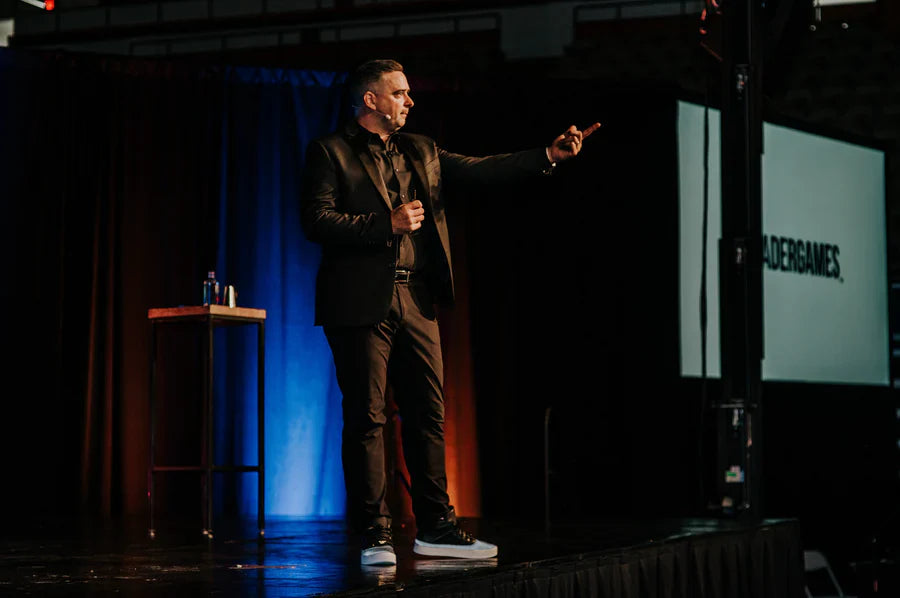
The Keynote Everyone Forgets by Tuesday
I've talked to a lot of event planners. And one thing I hear almost every time, usually after we've built some trust in the conversation, is this: "We spent $15,000 on a speaker last year and nobody remembers what he said."
That stings. Not just because of the budget, but because those attendees gave up a full day or two days of their lives to be there. They traveled. They sat through sessions. And they walked away with... a tote bag and a vague sense of inspiration that faded by the time they hit the highway.
The traditional conference keynote is broken. A speaker walks out, tells some compelling stories, drops a few quotable lines, and leaves. The audience claps. The event planner exhales. And then nothing changes.
That's exactly why I built my approach around something different. As an interactive keynote speaker for conferences, my entire framework is designed so that audiences don't just hear ideas. They practice them, discuss them, and feel the shift happen in real time. By the time I walk off stage, the room has already started changing.
Here's what that actually looks like in practice.
The Problem with Passive Audiences
Research from the Association for Talent Development consistently shows that passive learning, sitting and listening, produces retention rates below 10% after 72 hours. Ten percent. That means 90% of what your expensive keynote speaker said is gone before your team even gets back to the office.
The solution isn't a more charismatic speaker. It's a different structure entirely.
When people participate, they remember. When they turn to a colleague and work through an idea out loud, they own it. That's not a theory. That's how the brain works. And that's the foundation of everything I do on stage.
My keynotes run on a 60/40 model. Sixty percent is my content: stories, frameworks, challenges, and real-world examples. Forty percent is the room. Structured audience participation, live exercises, small group discussions, and moments where your team is doing the work, not just watching someone talk about it.
The result is a room full of people who leave with changed behavior, not just changed feelings.
What 40% Participation Actually Looks Like
I want to be specific here, because "audience participation" can mean a lot of things. It doesn't mean cheesy icebreakers. It doesn't mean forcing introverts to stand up and share with strangers.
It means intentional, facilitated moments where the content lands in a personal way.
For example, during one session at a franchise convention last year, I paused mid-keynote and had every leader in the room write down one specific behavior they were tolerating on their team that they shouldn't be. Thirty seconds of silence. Then I asked three people to share. What followed was one of the most honest conversations that group had ever had publicly. The event planner told me afterward it was the moment the whole room shifted.
That's 40% participation. It's not fluff. It's the mechanism that makes the other 60% stick.
Some other ways I build participation into keynotes:
- Paired reflection exercises where two people process a concept together before I move on
- Real-time polling or response prompts that surface what the audience is actually thinking
- Small group challenges with a specific deliverable tied to the session's theme
- Live accountability moments where teams make a commitment in front of each other
Every element is designed for the specific audience. A leadership retreat at a tech company looks different from a franchise convention. I build accordingly.
Why Conference Planners Keep Booking Interactive Speakers
Here's the thing about the event planning world right now. Budgets are tighter. Scrutiny is higher. And attendees are more distracted than ever. You are competing with every notification on every phone in that room.
A talking head at a podium does not win that competition.
Interactive keynote speakers do. And the data backs it up. According to Eventbrite's industry research, events with interactive programming consistently score higher on attendee satisfaction surveys and are more likely to drive repeat attendance year over year.
When I work with a conference organizer, my goal is simple: make you look like a genius for booking me. That means the session runs smoothly, the energy is right, the content connects to your conference theme, and your attendees tell their colleagues about it when they get home.
I've worked conferences across industries, from healthcare associations to tech company retreats to national franchise conventions. The format works across all of them because human beings respond to engagement the same way regardless of their industry.
If you're comparing speakers for your next event, I'd encourage you to ask every candidate one question: "What does your audience actually do during your keynote?" The answer will tell you everything.
How I Prep for Your Specific Event
One of the things I hear from clients before they book me is concern about whether a speaker will just show up and deliver the same canned talk they give everyone. That's a fair concern. I've seen it happen.
My process is different. Before any keynote, I have a detailed intake conversation with the event organizer. I want to know what's actually going on inside the organization. What's the tension the team is feeling? What does leadership want people to walk away believing or doing differently? What happened at last year's event that we're building on or moving away from?
That information shapes everything. The stories I choose. The exercises I design. The language I use. I'm not performing a set. I'm delivering a session built for your room.
You can learn more about how I work with event organizers and what the booking process looks like from first call to the moment I walk on stage.
The Standard Has Changed
Audiences today are smart. They can smell a generic keynote from the opening slide. And they disengage fast.
But when a speaker walks out and the first thing that happens is something unexpected, something that immediately involves them, the energy in the room shifts. Attention locks in. People put their phones down. They lean forward.
That's what I build every time. Not inspiration alone. Actual change, built into the structure of the session itself.
If you're planning a conference, a company retreat, or an association event and you're looking for an interactive keynote speaker who delivers something your attendees will still be talking about weeks later, I'd love to have a conversation. Reach out through the contact page on my site and let's talk about what your event needs.